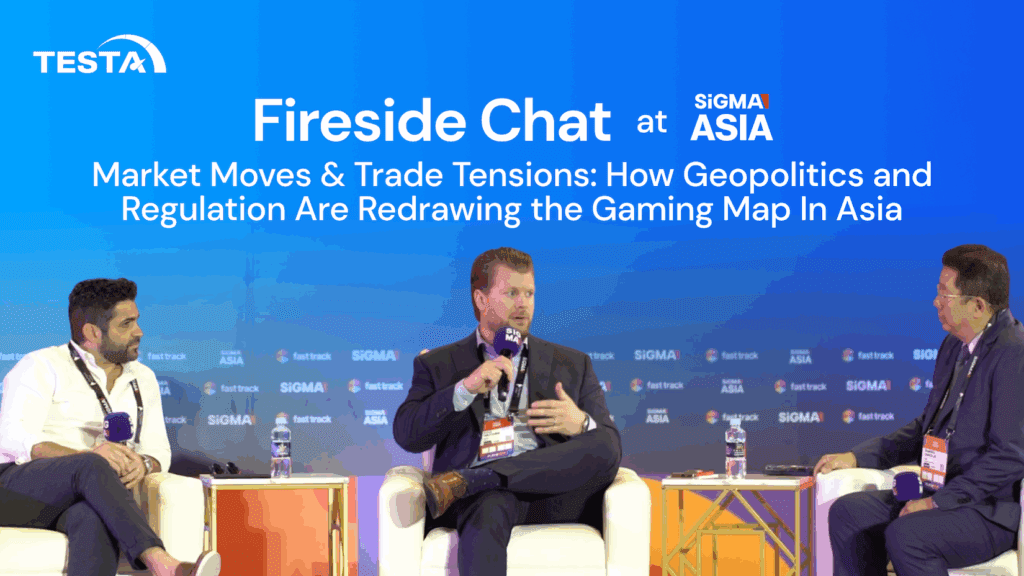
At SiGMA Asia 2025 in Manila, TESTA CEO Kyle Wiltshire and DFNN Executive Chairman Ramon Garcia Jr., moderated by Oliver de Bono, talked about the dynamic shifts reshaping the iGaming industry in Asia.
The 29-minute fireside chat, titled “Market Moves & Trade Tensions: How Geopolitics and Regulation Are Redrawing the Gaming Map in Asia,” explored the competitive landscape, regulatory changes, and workforce challenges driving the region’s iGaming evolution.
From the Philippines’ established dominance to the rise of new hubs like Thailand and Vietnam, the discussion highlighted critical trends and opportunities. Below, we summarize the key takeaways from this insightful conversation.
The Philippines: A mature iGaming hub facing new competition
The Philippines has long been Asia’s iGaming powerhouse, bolstered by a deep talent pool and strong English proficiency. However, recent developments, such as PAGCOR’s 2024 licensing reforms, have intensified competition for skilled workforces as emerging hubs like Thailand and Vietnam attract investment. Kyle Wiltshire emphasized the Philippines’ decades-long experience, noting its workforce’s “scar tissue and lessons learned” from working with multiple operators, but cautioned that brain drain to countries like Japan and Singapore could erode this advantage.
Emerging iGaming hubs in Southeast Asia
Thailand’s unexpected pivot from a gambling ban to potential regulation and Vietnam’s rise as a tech development hub are reshaping the regional landscape. Ramon Garcia Jr. highlighted Thailand’s superior tourism infrastructure and Vietnam’s focus on software development as competitive threats. Both panelists noted that these markets are actively recruiting talent, potentially pulling skilled workers from the Philippines, which could create a talent gap if not addressed through education and retention strategies.
Regulatory shifts and the risk of black markets
The 2024 PAGCOR reforms, including lower taxes and streamlined licensing, have made the Philippines more attractive for iGaming businesses. However, Kyle Wiltshire warned of the risks of overregulation, drawing parallels with Europe, where restrictive rules in markets like Germany have fueled black markets. He stressed that excessive interference in the player experience, such as rigid betting limits, could push players to offshore operators, a trend Asia must avoid to maintain growth.
Geopolitical influences on iGaming investment
Global trade tensions, particularly between the U.S. and China, are impacting the Philippines’ iGaming market. Ramon Garcia Jr. noted a pullback in Chinese operations due to security concerns but emphasized the Philippines’ historically stable relations with Chinese workers, a unique advantage in Southeast Asia. The country’s alignment with nations like Japan, the U.S., and Australia further bolsters its appeal as a stable investment destination amidst geopolitical shifts.
Building a skilled workforce for the future
Both speakers underscored the need for greater investment in STEM education and university partnerships to address the Philippines’ shortage of advanced technical skills, such as software engineering and cybersecurity. Kyle Wiltshire highlighted Vietnam’s edge in producing full-stack developers, while Ramon Garcia Jr. suggested the gaming industry collaborate with top-tier universities to train talent tailored to iGaming needs. Such initiatives could position the Philippines as Asia’s software development hub for the sector.
Investment opportunities and regulatory incentives
The Philippines offers compelling incentives for iGaming businesses, including special economic zones with 15% income tax rates for foreign workers and simplified one-person corporation laws. Ramon Garcia Jr. noted that these zones streamline business setup, making the Philippines competitive with Singapore. However, overlapping regulations, such as internet transaction taxes, require clearer frameworks to maximize investor confidence and drive growth.
Watch the full discussion
The SiGMA Asia 2025 fireside chat offers a deep dive into the opportunities and challenges shaping the iGaming industry in Asia. From workforce competition to regulatory innovation, Kyle Wiltshire and Ramon Garcia Jr. provide actionable insights for businesses looking to thrive in this dynamic market. Watch the full 29-minute discussion on YouTube to explore the future of iGaming in Asia:
