

Overview
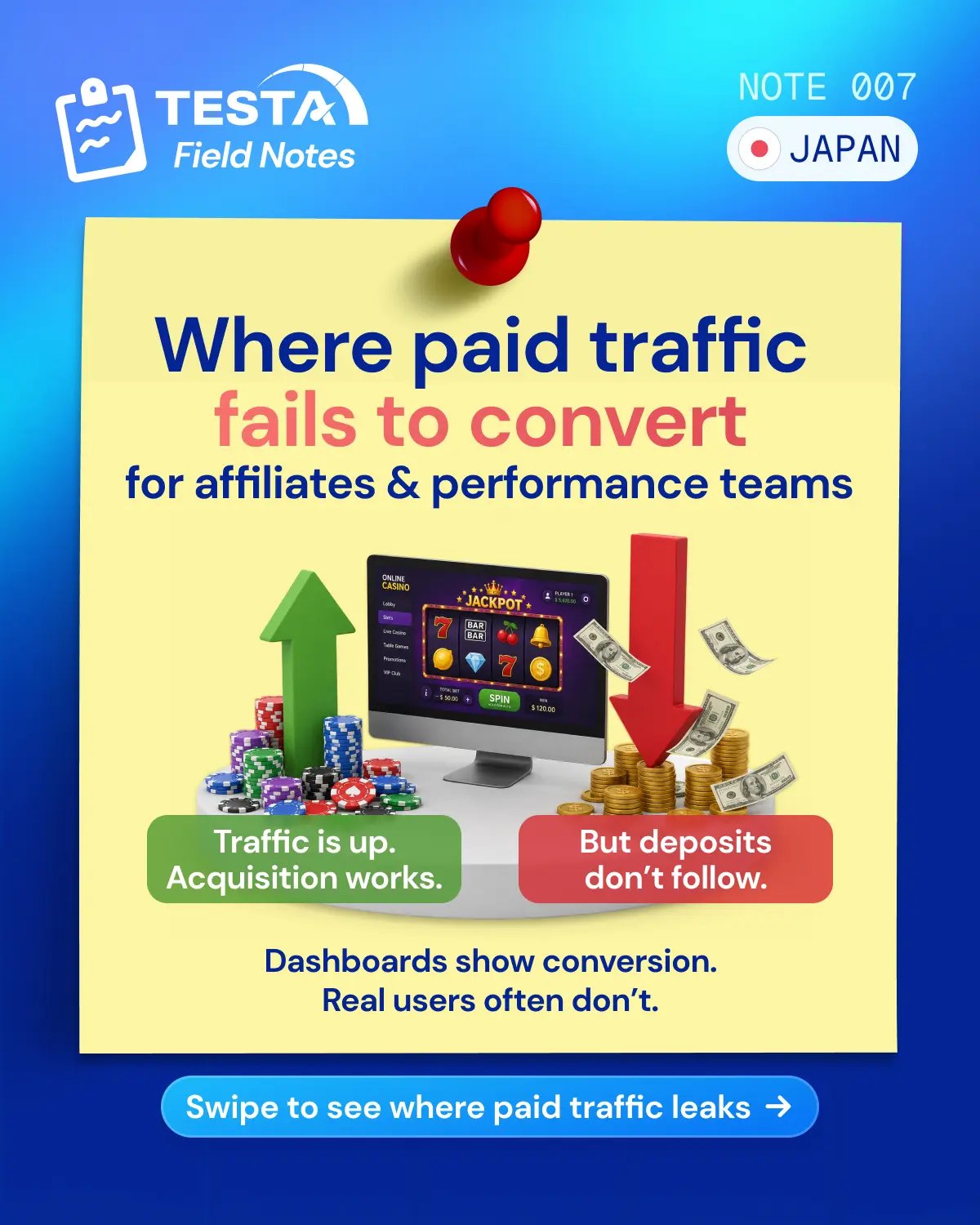
Affiliate and performance marketing teams working across multiple iGaming markets often face a critical issue:
Why high-intent traffic isn’t consistently converting once it reaches operator sites.
While acquisition metrics were strong, post-click performance lacked visibility—particularly across onboarding, payments, and early user engagement.
Problem
The team faced a common but hard-to-diagnose challenge:
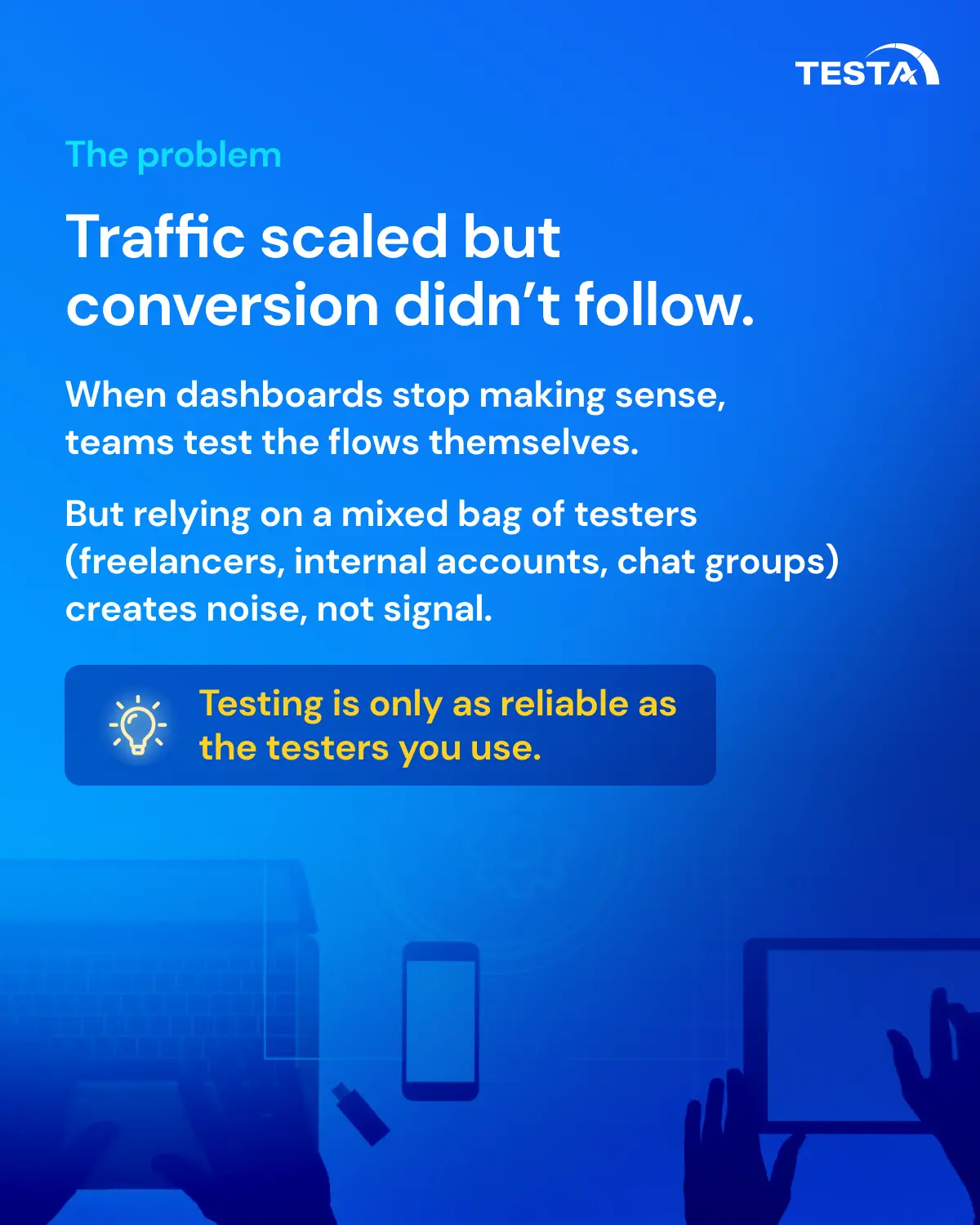
Strong traffic performance, unclear conversion outcomes.
When faced with this, teams often try to test the flows themselves. But relying on a mixed bag of testers—freelancers, internal accounts, affiliate traffic, or local chat groups—creates noise rather than signal. Testing visibility is only as clear and reliable as the test case and testers make it.
Specifically, they lacked structured insight into:
- Whether deposit flows were actually working
- Bonus allocation and usability
- CRM follow-up after registration
- How different user types behave in the same flow
but not how real users experienced the journey.
This created a gap between:
- Traffic delivered
- Revenue realised
Solution
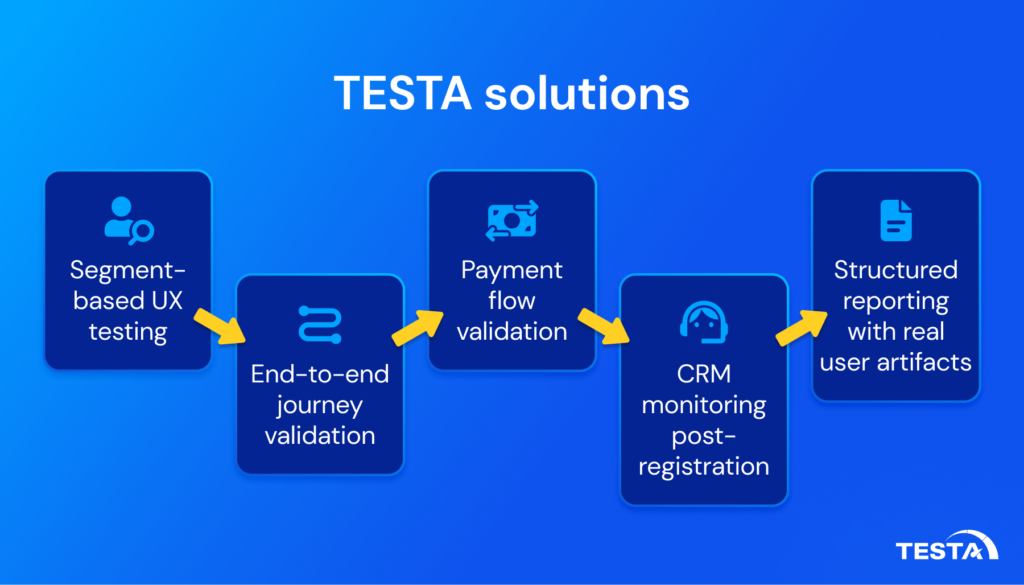
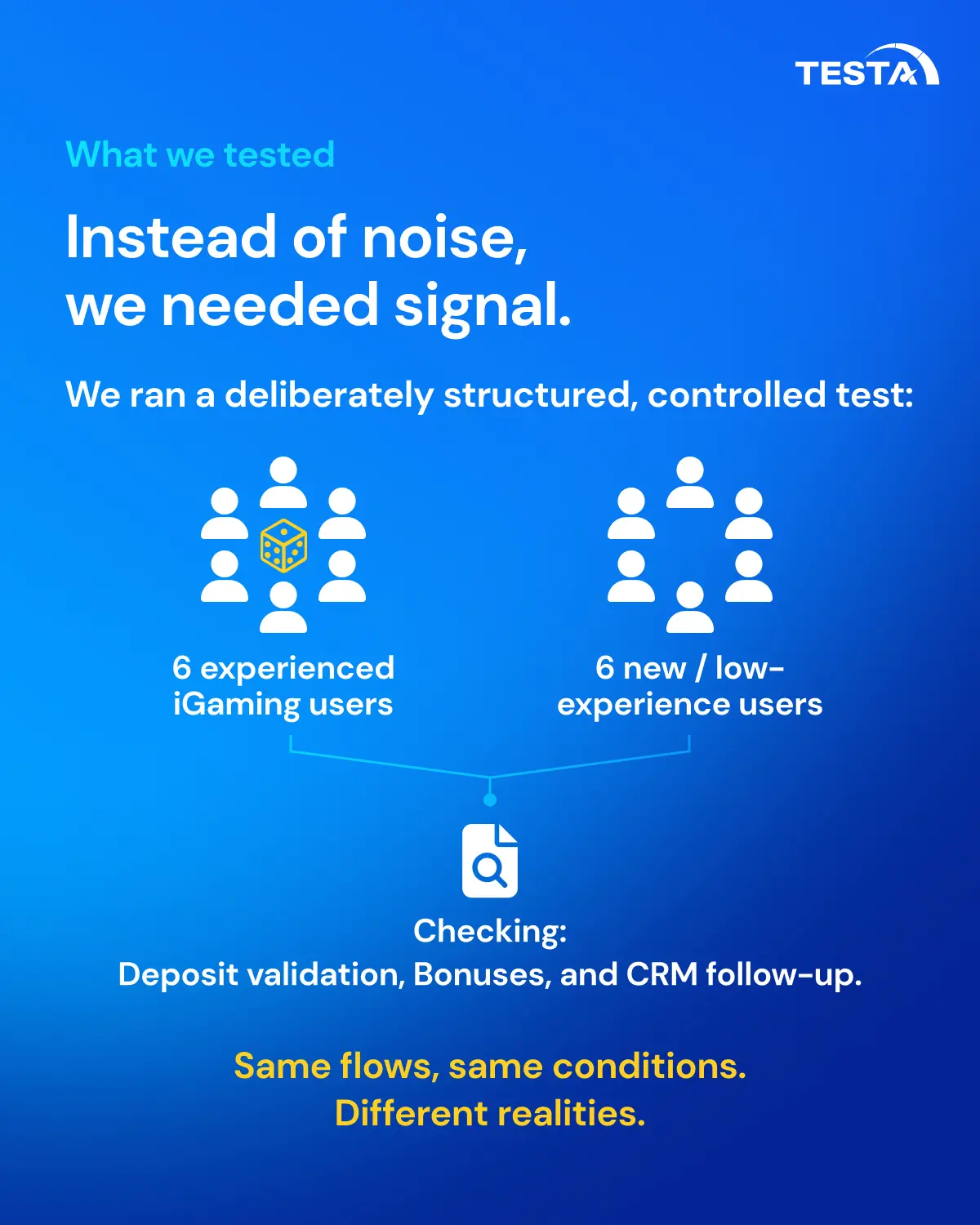
TESTA designed a real-user testing program focused on post-click conversion reality, moving away from unstructured ad-hoc testing to a deliberately controlled approach.
1. Segment-based UX testing
Instead of a mixed tester base, we structured the group deliberately:
- 6 Experienced iGaming users
- 6 New / low-experience users
This allowed the team to observe how different user types:
- Navigate onboarding
- Interpret payment options
- Respond to friction or uncertainty
2. End-to-end journey validation
Each tester completed full user flows:
- Registration
- Deposit attempts (multiple methods)
- Bonus interaction
- First play
This ensured visibility across the entire conversion funnel, not isolated steps.
3. Payment flow validation in real conditions
Testing included:
- Multiple deposit methods (including higher-friction options like bank transfer)
- Real user decision-making (including hesitation or refusal to proceed)
This uncovered both:
- Technical failures
- Trust and usability barriers
4. CRM monitoring post-registration
To extend visibility beyond first interaction:
- Testers forwarded CRM emails for 7 days post-registration
- Captured how operators:
- Follow up with unconverted users
- Communicate offers and incentives
This added a layer of insight typically missing from QA testing.
5. Structured reporting with real-user artifacts
Each test included:
- Video recordings
- Screenshots
- Step-by-step outcomes
- Summary reports highlighting:
- What worked
- What required attention
- What failed
Outcome
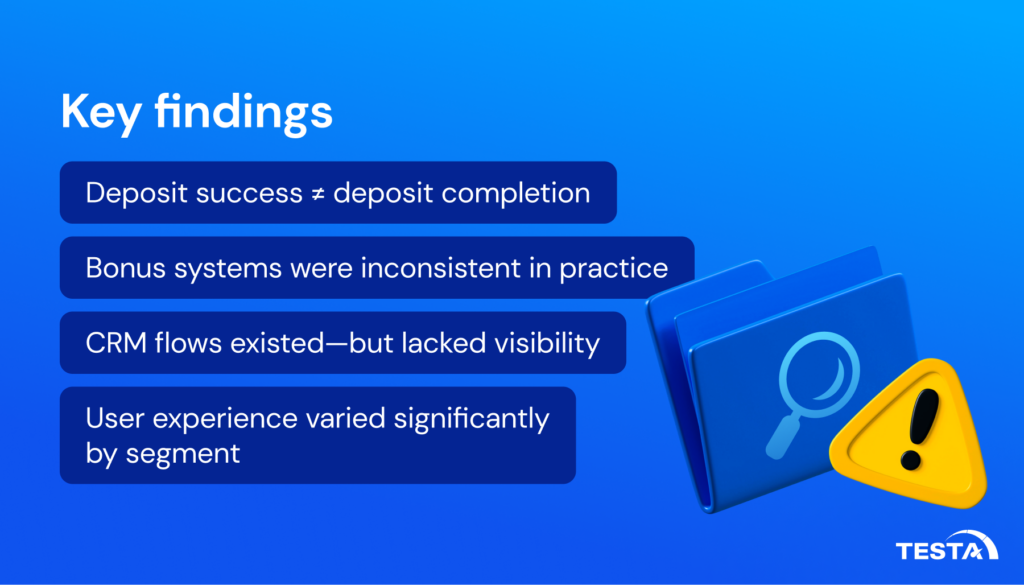
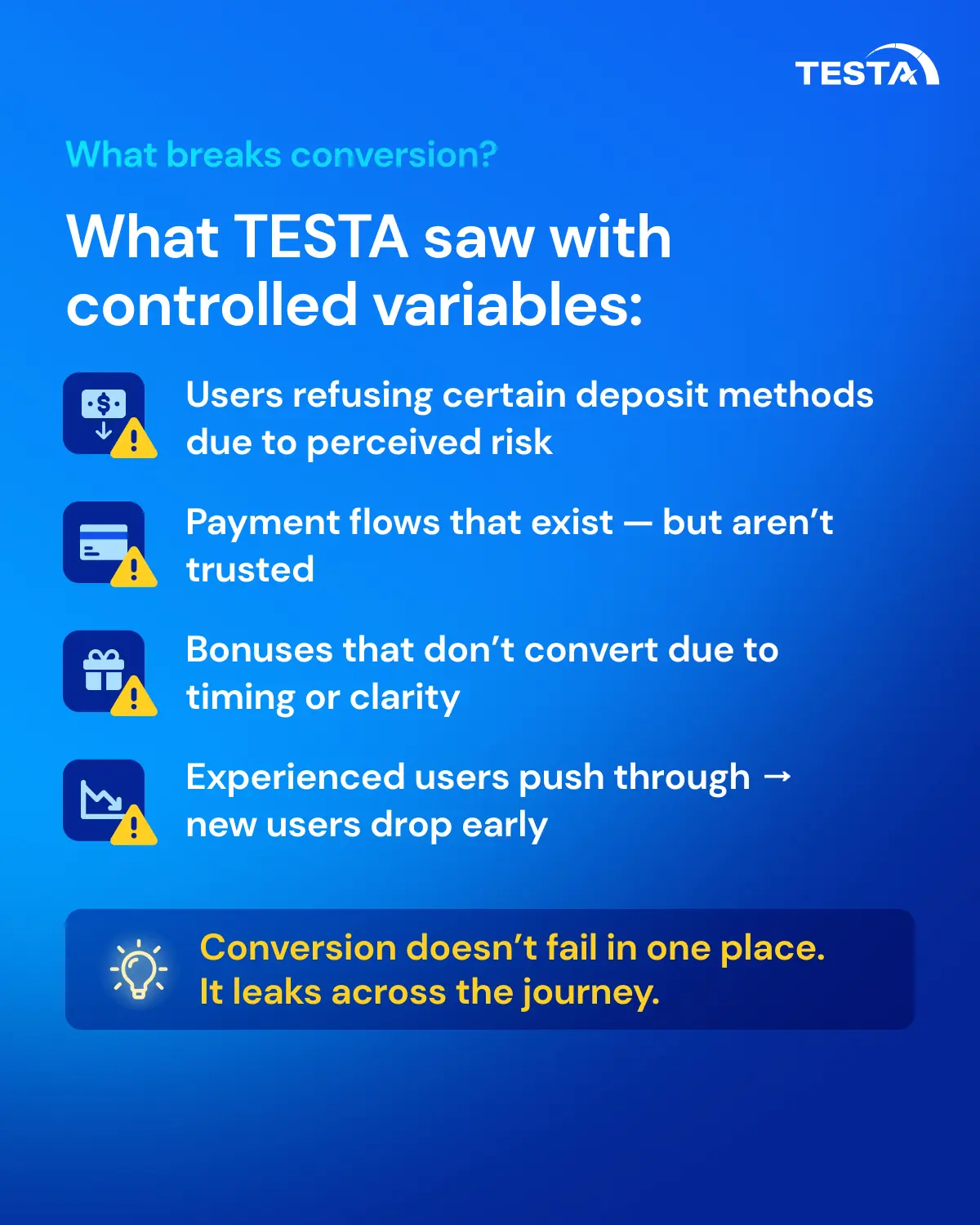
The testing revealed that conversion loss was not caused by a single issue—but by multiple small gaps across the journey.
Key findings:
1. Deposit success ≠ deposit completion
- Some payment methods failed technically
- Others were abandoned due to lack of user confidence or clarity
2. Bonus systems were inconsistent in practice
- Bonuses were available, but not always:
- Clearly communicated
- Immediately claimable
- Understood by new users
3. CRM flows existed—but lacked visibility
- Without capturing real emails, post-registration engagement was effectively invisible
- Forwarded CRM flows provided insight into conversion recovery attempts
4. User experience varied significantly by segment
- Experienced users:
- Pushed through friction
- Exposed system inconsistencies
- New users:
- Hesitated earlier
- Dropped off before completing key steps
Business impact
The team gained clear, actionable visibility into post-click performance, enabling them to:
- Identify where conversion leakage occurs
- Evaluate operator partners based on real user outcomes
- Align acquisition strategy with actual user experience
- Improve decision-making across markets and campaigns
Conclusion
Traffic performance alone doesn’t guarantee revenue.
Without visibility into the user journey after the click, critical conversion gaps remain hidden.
By combining:
- Real users
- Market-specific conditions
- Segment-based testing
TESTA provided a clear picture of how acquisition translates into real-world outcomes.

Want to understand what happens after your users land? Get in touch to run a conversion-focused test in your key markets.
